Why a Modest Gift Given Consistently Can Outperform a Major One-Time Donation

There is a deeply embedded assumption in American philanthropy that bigger is always better. A $50,000 donation carries the weight of significance. It commands attention, earns recognition, and feels—by any reasonable measure—more generous than a $5,000 contribution. Yet for many community nonprofits operating on the front lines of social need, the opposite may be true. A donor who gives $5,000 every year for a decade can be worth more to an organization than someone who writes a single large check and moves on.
Understanding why requires looking beyond the dollar amount and into the operational realities that determine whether a nonprofit thrives or merely survives.
The Hidden Cost of Unpredictable Funding
Most people who give charitably do not think about what happens inside a nonprofit after their donation arrives. The money is deposited, a thank-you letter is sent, and the assumption is that the work simply continues. But nonprofit administrators know a different reality.
When a large, one-time gift arrives without any commitment of future support, it creates what budget managers sometimes call a "cliff effect." An organization might use the windfall to launch a new program, hire a coordinator, or expand services into an underserved neighborhood. But if that funding does not recur, those same programs must be scaled back or discontinued—often leaving the very people they were designed to serve worse off than before.
A 2022 survey by the National Council of Nonprofits found that unpredictable funding was among the top operational challenges facing community organizations across the country. Program directors consistently reported that they could not hire permanent staff, sign multi-year leases, or commit to long-term community partnerships without some assurance of sustained revenue. Large but irregular gifts, no matter how generous in spirit, rarely provide that assurance.
What Recurring Giving Actually Enables
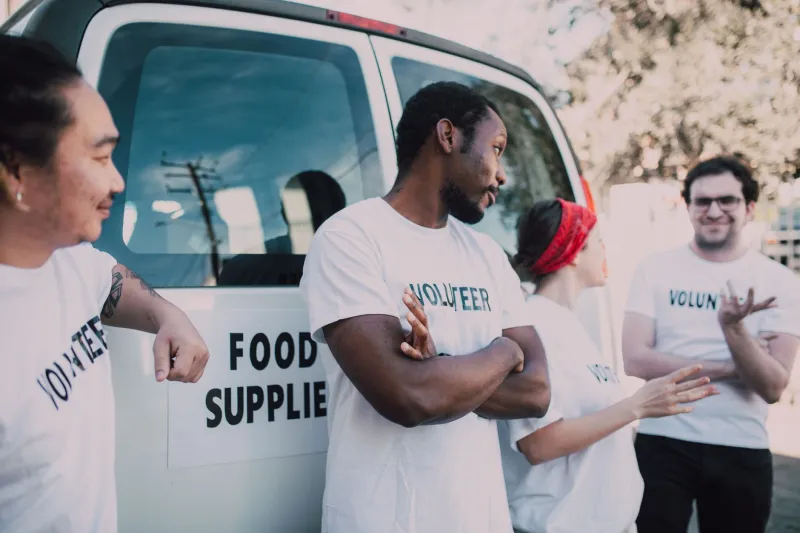
Consider a neighborhood food pantry serving several hundred families each month. A one-time gift of $50,000 might fund a full year of operations—an extraordinary contribution. But when that year ends and the donor does not return, the organization faces a destabilizing scramble for replacement funds. Staff hired during the flush year may need to be let go. Families who came to rely on expanded services may find those services reduced.
Now consider a donor who gives $5,000 annually over ten years. The total is the same, but the effect is profoundly different. The pantry can build that contribution into its baseline budget. It can hire a part-time outreach worker with reasonable confidence in their continued employment. It can negotiate a longer-term agreement with a local grocery supplier. It can, in short, operate like a sustainable institution rather than a perpetual emergency.
This is not a hypothetical. Organizations that successfully cultivate recurring donor bases consistently report greater programmatic stability, lower staff turnover, and stronger community trust—all of which compound over time into measurable social outcomes.
The Trust Economy That Large Gifts Often Cannot Buy
There is another dimension to this equation that rarely appears in fundraising literature: the relationship between consistency and community credibility.
Local nonprofits earn the trust of the neighborhoods they serve through sustained presence. A youth center that has operated reliably for fifteen years becomes a pillar of community life in ways that a well-funded but short-lived initiative never can. Parents refer their children there. Teachers send referrals. Local businesses partner with organizations they believe will still exist next year.
Recurring donors are essential to building that kind of institutional durability. Their ongoing commitment signals to the broader community—and to other potential funders—that the organization has a stable base of support. This signal effect is difficult to replicate with occasional large gifts, which may be seen by institutional grantmakers as evidence of donor volatility rather than organizational strength.
Rethinking What "Major" Giving Means
None of this is intended to discourage significant charitable gifts. Transformational funding has its place, particularly when it is paired with multi-year commitments or used to build endowments that generate ongoing returns. The challenge is not the size of the gift but the expectation—on both sides—about what follows.
Donors who wish to make a larger contribution would do well to consider structuring it as a pledge spread across several years rather than a single transaction. Many nonprofits have the capacity to receive a $50,000 commitment distributed as $10,000 annually over five years, and that structure almost always serves the organization's planning needs more effectively than a lump sum.
For donors who cannot give at that level, the message is equally empowering. A $1,000 annual pledge—renewed year after year—is not a small gift in any meaningful sense. For a community organization working to serve its neighbors with limited resources, it is the kind of reliable foundation upon which real, lasting programs are built.
How to Give With Staying Power
If you are evaluating how to make your charitable giving more impactful, consider the following approaches:
Set up automatic recurring contributions. Most nonprofit donation platforms allow monthly or annual automatic payments. This removes the friction of annual re-decision and ensures the organization receives your support regardless of how busy life becomes.
Ask organizations about their unrestricted fund needs. Restricted gifts—those designated for a specific program—can be useful, but unrestricted funds give nonprofits the flexibility to address needs as they arise. Offering unrestricted recurring support is often more valuable than a larger restricted gift.
Communicate your intentions. If you plan to give annually, tell the organization. Even an informal commitment helps program directors plan more effectively and may allow them to include your anticipated support in grant applications.
Review, but don't reflexively redirect. It is reasonable to evaluate your giving periodically. But donors who shift their support every few years—chasing the newest cause or the most compelling campaign—inadvertently destabilize the organizations they previously supported. Loyalty, in philanthropy as in relationships, has real value.
The Quiet Power of the Committed Donor
At Balaji Charitable Trust, we have seen firsthand how the most transformative community outcomes are rarely the product of a single dramatic gift. They are built through years of patient, consistent investment—by donors who understand that change is not an event but a process.
The nonprofit sector in America is filled with organizations doing extraordinary work with limited resources. They do not need more one-time champions. They need sustained partners who believe in the long arc of community transformation. If you have the capacity to be one of those partners, the impact of your giving—measured not in dollars but in lives genuinely changed—may surprise you.