The Hidden Mental Health Infrastructure Hiding in Plain Sight: America's Community Nonprofits
In May 2023, the United States Surgeon General issued an advisory that used language rarely associated with public health announcements. He described loneliness and social isolation as an epidemic—one with mortality consequences comparable to smoking fifteen cigarettes a day. The advisory cited research linking chronic isolation to elevated risks of heart disease, dementia, depression, and premature death. It called for a national strategy.
What it did not fully capture is that such a strategy already exists, in fragmented and underfunded form, in nearly every American community. It operates out of church basements, converted storefronts, public library meeting rooms, and community center gymnasiums. It is staffed largely by people earning modest wages or volunteering their time. And it is funded—precariously—by a combination of government grants, foundation dollars, and individual donations.
It is the community nonprofit sector. And it may be the most undervalued mental health infrastructure in the country.
When Belonging Is the Intervention
Clinical mental health care is essential, and the shortage of licensed therapists and psychiatrists in the United States is a genuine crisis. But the research on loneliness points to something that clinical settings are not primarily designed to provide: the experience of being known, needed, and embedded in a community.
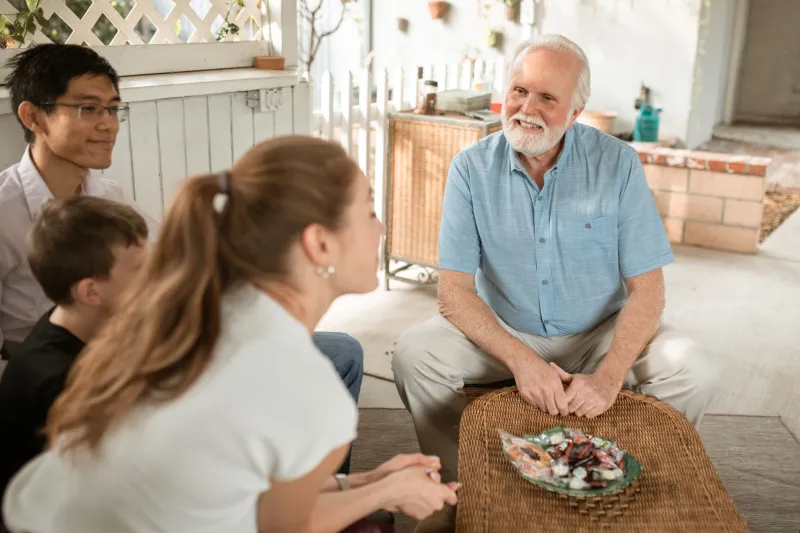
This is precisely what well-functioning community organizations offer. A senior center is not a mental health clinic. But for an elderly person who lives alone and has few remaining social connections, the Tuesday afternoon card game, the familiar faces, and the staff member who notices when someone has not come in for a few days may do more for their psychological wellbeing than any prescription.
A youth program is not therapy. But for an adolescent navigating a turbulent home environment, the mentorship of a trusted adult, the structure of a weekly schedule, and the sense of belonging to a group of peers can provide the emotional scaffolding that prevents crisis from becoming catastrophe.
Researchers at Brigham Young University, whose meta-analysis of loneliness and mortality became foundational to the Surgeon General's advisory, have noted that the quality of social relationships—not merely their quantity—is what matters most. Community organizations, at their best, cultivate exactly that quality.
The Geography of Isolation
Loneliness is not evenly distributed across American society. It concentrates in predictable places: rural counties where the nearest neighbor may be miles away, urban neighborhoods hollowed out by economic disinvestment, suburban communities designed around automobiles rather than human interaction, and wherever older adults or people with disabilities find their mobility restricted.
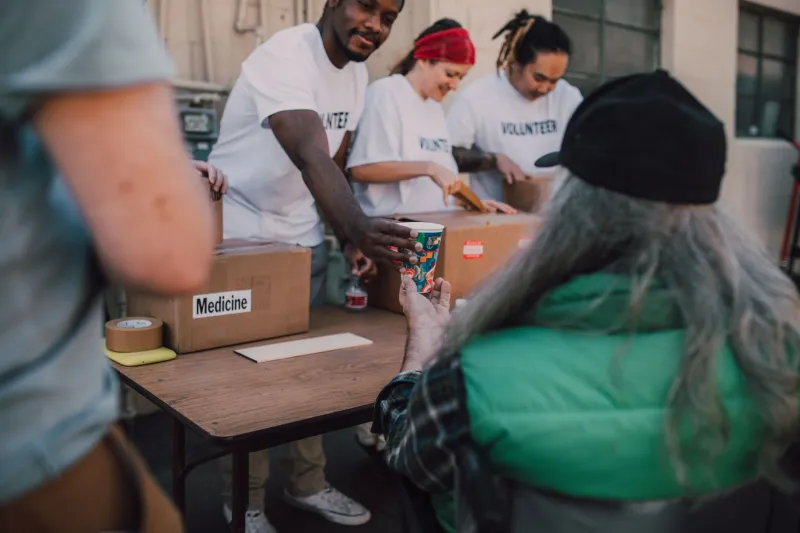
In each of these contexts, local nonprofits often function as connective tissue—the institutions that stitch isolated individuals back into something resembling community. Food banks serve this function not only by providing nutrition but by creating a regular point of contact for people who might otherwise have no reason to leave their homes. Neighborhood associations provide it by giving residents a shared project and a reason to know each other's names.
The tragedy is that these organizations are routinely underfunded relative to the scope of the need they address. While national mental health organizations and hospital systems capture significant philanthropic attention, the local food pantry or senior recreation program often struggles to cover its operating costs.
What the Research Now Confirms
The evidence linking community participation to mental health outcomes has grown substantially in recent years. A 2021 study published in the American Journal of Psychiatry found that social engagement—particularly participation in community groups and volunteer activities—was associated with significantly lower rates of depression among adults over 50. A separate analysis from Harvard's Human Flourishing Program identified community belonging as one of the strongest predictors of life satisfaction across demographic groups.
Perhaps most compellingly, research on the social determinants of health has consistently found that factors like community cohesion, neighborhood trust, and access to social support networks predict health outcomes as powerfully as access to medical care. This places community nonprofits squarely within the domain of public health infrastructure—a categorization that most funding systems have been slow to recognize.
The Donor's Role in Building Social Resilience
For individuals who give charitably, this framing suggests a reorientation of how community organizations are understood and supported. A donation to a local senior center is not merely a contribution to recreational programming. It is an investment in the mental health and longevity of the community's most isolated residents. A gift to a youth mentorship program is not simply support for after-school activities. It is funding for the kind of relational infrastructure that shapes psychological development and reduces long-term social costs.
This reframing matters because it challenges the hierarchy of impact that many donors unconsciously apply. Organizations with clinical-sounding missions—health clinics, mental health hotlines, substance use treatment centers—often receive priority consideration. Community hubs that offer meals, conversation, and a sense of belonging are sometimes perceived as less urgent. The research suggests this perception is mistaken.
Signals to Look for When Evaluating Community Organizations
Not every community nonprofit is equally effective at building social connection. Donors who wish to support organizations that genuinely address isolation and belonging might consider the following indicators:
Sustained community presence. Organizations that have operated in the same neighborhood for many years have typically built the kind of trust that enables meaningful relationships to form.
Relationship-centered programming. Look for organizations whose programs are designed around repeated interaction and ongoing relationships rather than one-time service transactions.
Staff and volunteer retention. High turnover disrupts the relational continuity that makes community organizations effective. Organizations with stable, long-tenured staff are better positioned to build genuine connections with the people they serve.
Community voice in governance. Organizations whose leadership and programming reflect the priorities of the community they serve are more likely to address actual needs rather than assumed ones.
A Different Kind of Health Investment
The United States spends more per capita on healthcare than any other developed nation, yet consistently ranks among the loneliest. This paradox reflects, in part, a systemic failure to invest in the social conditions that sustain mental and emotional health.
Community nonprofits cannot solve that systemic failure alone. But they are doing indispensable work in its shadow—providing belonging, connection, and purpose to people who might otherwise find none. At Balaji Charitable Trust, we believe that supporting these organizations is not a secondary philanthropic priority. It is one of the most direct and meaningful investments a donor can make in the long-term health of American communities.
The infrastructure for addressing loneliness already exists. It simply needs to be recognized, supported, and sustained.