When Helping Hurts: The Hidden Costs of Volunteering and What Nonprofits Actually Need From You

There is something deeply American about rolling up your sleeves and showing up. The tradition of neighbors helping neighbors, of communities rallying around shared challenges, is woven into the national character. Volunteering sits at the center of that tradition—celebrated in schools, encouraged by employers, and treated in popular culture as an uncomplicated good.
But inside the offices of many nonprofits, particularly smaller community organizations operating with skeleton crews and constrained budgets, a more complicated truth quietly unfolds. Volunteers, despite the best of intentions, can sometimes cost an organization more than they contribute. Understanding that tension is not a reason to stop giving your time. It is, however, a reason to give it more wisely.
The Invisible Labor of Managing Generosity
Every volunteer who walks through a nonprofit's door—whether physically or virtually—requires something from the organization before they can offer anything in return. Staff members must recruit, screen, orient, train, supervise, and coordinate that individual. For a large, well-resourced charity with dedicated volunteer management infrastructure, this overhead is manageable. For a small organization where the program director also answers the phones and writes the grant reports, it can become genuinely destabilizing.
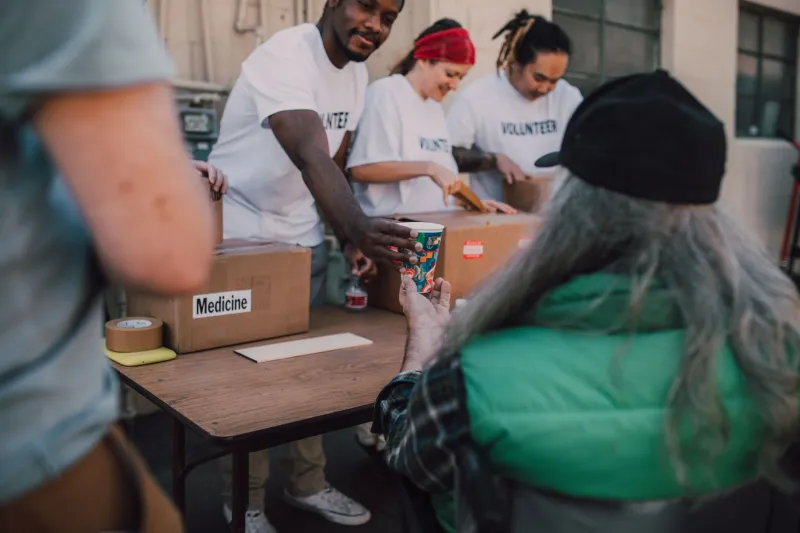
Consider a community food pantry staffed by two full-time employees. When a corporate group arrives for a one-day service event—enthusiastic, well-dressed, and entirely unfamiliar with the pantry's intake systems—someone must pause their actual work to guide those volunteers through every step. The pantry may sort more boxes that afternoon than it would have otherwise. But the staff member who spent four hours supervising instead of processing client applications, updating donor records, or preparing the monthly report has absorbed a real cost that rarely appears in any volunteer impact summary.
This dynamic is sometimes described by nonprofit professionals as the "supervision tax"—the hidden toll that high-turnover, low-skill, or one-time volunteer engagements impose on organizations that can least afford to pay it.
When Good Intentions Create Dependency
Beyond the immediate supervision burden, certain patterns of volunteering can create longer-term structural problems. When an organization comes to rely on a rotating cast of volunteers for functions that genuinely require consistency and institutional knowledge—client intake, case management, program delivery—it becomes vulnerable in ways that are difficult to see from the outside.
Volunteers leave. They get busy. Their circumstances change. And when the person who has been leading a weekly youth mentorship session departs after six months without a clear transition plan, the young people who built a relationship with that individual bear the real cost. The organization, meanwhile, must rebuild trust and continuity from scratch.
This is not an argument against volunteerism. It is an argument for honesty about what kinds of volunteer engagement build organizational capacity and what kinds quietly erode it.
The Roles Where Volunteers Create Genuine Leverage
None of this means that volunteering is the wrong choice. In the right circumstances, skilled and consistent volunteers are among the most valuable assets a nonprofit can cultivate. The key distinction lies in matching the nature of the contribution to the actual needs of the organization.
Professional skills volunteering—sometimes called pro bono service—tends to generate exceptional returns. A nonprofit that needs a new website but cannot afford a web developer benefits enormously from a volunteer who brings that expertise. The same is true for legal counsel, financial auditing, marketing strategy, human resources guidance, and technology support. These are services the organization would otherwise pay for or go without entirely. When a skilled volunteer fills that gap, the impact is concrete and measurable.
Long-term, relationship-based volunteering also creates genuine value. A volunteer who commits to a program for a full year, learns its systems, builds relationships with the people it serves, and integrates into the organizational culture is a fundamentally different resource than a one-time participant. Organizations can invest in training that individual because the return on that investment will be realized over time.
Board service represents another high-leverage form of contribution. Effective nonprofit board members bring strategic guidance, professional networks, fundraising capacity, and governance oversight—none of which require daily management by staff. A well-engaged board member who opens doors to new funders or helps navigate a difficult financial period may contribute more to an organization's sustainability than dozens of one-day volunteers combined.
Redirecting Time Toward Financial Support
For many well-meaning supporters, the most honest question to ask is whether their time or their financial contribution would do more good. This is not a comfortable question, particularly in a culture that valorizes hands-on involvement. But it deserves a serious answer.
A donor who earns a professional income and donates two Saturdays per year to a nonprofit is giving something real. But if those same eight hours were spent on income-generating work, and the resulting funds were donated to the organization, the nonprofit might be able to hire additional staff capacity, purchase equipment, or fund a program expansion that far exceeds the value of the manual labor provided.
This calculation does not apply universally. For retired individuals, those between jobs, or people whose primary resource is time rather than income, volunteering may genuinely be the highest-value contribution available. And for anyone seeking to build a deeper understanding of a cause before committing financial resources, hands-on engagement provides irreplaceable context.
But for professionals with discretionary income and limited free time, the honest answer may sometimes be: write the check.
How to Ask the Right Questions Before You Volunteer
If you are committed to volunteering—and there are excellent reasons to be—the most valuable thing you can do before showing up is ask the organization directly what it actually needs. Not what sounds appealing to you. Not what your employer's volunteer program has arranged. What does the organization need most?
Specifically, consider asking:
- What skills gaps are you currently trying to fill? This surfaces opportunities for professional skills volunteering that may not be advertised.
- What does your ideal volunteer commitment look like in terms of duration and consistency? This helps you assess whether you can genuinely meet their needs rather than creating a short-term engagement they must manage and then recover from.
- Are there ways I could support you that don't require staff supervision time? Some organizations have developed self-directed volunteer roles specifically designed to reduce that supervision burden.
- Would a financial contribution allow you to accomplish more than my time would? A nonprofit that answers this question honestly is one worth trusting with either resource.
The Most Generous Thing You Can Do
At Balaji Charitable Trust, our work is grounded in a conviction that genuine community transformation requires more than good intentions—it requires honest engagement with what communities and the organizations serving them actually need. That standard applies to how we give our money. It applies equally to how we give our time.
The most generous volunteers are not necessarily the ones who show up most often. They are the ones who ask hard questions, listen carefully to the answers, and align their contributions with the real needs of the mission rather than the emotional rewards of participation. That kind of thoughtful engagement—humble, adaptive, and genuinely other-centered—is what separates volunteering that empowers from volunteering that merely feels good.
When you approach a nonprofit as a partner rather than a visitor, you become something far more valuable than an extra set of hands. You become part of the infrastructure that makes lasting change possible.