Forgotten Frontlines: How Local Nonprofits Are Being Left Behind While National Charities Capture the Giving Landscape

A Tale of Two Charitable Worlds
Every year, Americans demonstrate remarkable generosity. According to Giving USA, total charitable contributions in the United States have consistently exceeded $400 billion annually in recent years—a figure that speaks to a deeply embedded culture of giving. Yet beneath that impressive headline number lies a troubling imbalance: the organizations best positioned to capture those dollars are rarely the ones working hardest in your zip code.
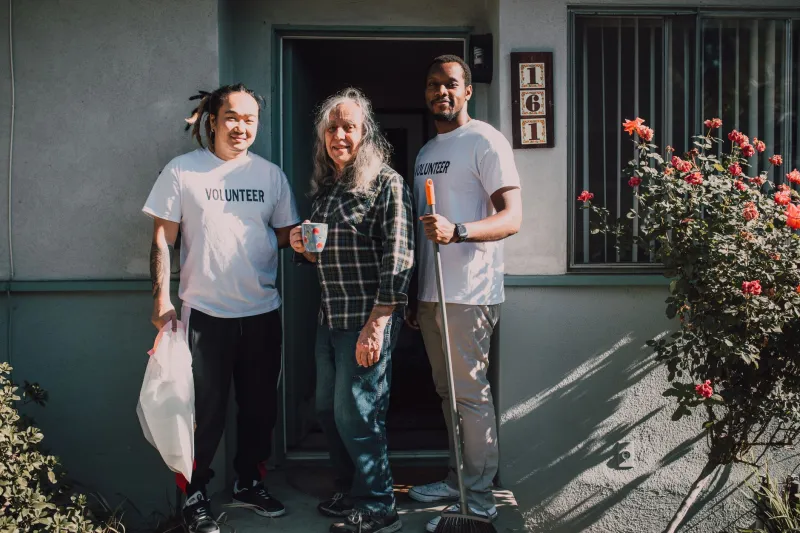
National charities with recognizable names, sophisticated marketing operations, and decades of brand equity consistently attract a disproportionate share of philanthropic resources. Meanwhile, the food pantry three blocks from your home, the after-school tutoring center serving first-generation students in your neighborhood, or the mental health outreach program operating out of a rented church basement—these organizations frequently struggle to meet basic operating costs, let alone expand their reach.
This is not a peripheral concern. It is a structural flaw in the American philanthropic ecosystem, and understanding it is essential for anyone who wants their charitable dollars to produce genuine, lasting community change.
Where the Money Actually Goes
Research from the National Center for Charitable Statistics and independent philanthropy analysts consistently reveals a stark concentration of giving. Organizations with annual budgets exceeding $50 million—a category dominated by national institutions in healthcare, higher education, and large-scale human services—receive the majority of individual charitable contributions in the United States. By contrast, the roughly 1.2 million nonprofits operating with budgets under $1 million collectively receive a fraction of total giving, despite representing the majority of organizations in the sector.
The disparity becomes even more pronounced at the hyperlocal level. Community-based organizations—those serving a specific neighborhood, city, or rural county—often lack access to the donor databases, planned giving programs, and corporate partnership pipelines that sustain larger institutions. Many operate with volunteer-heavy staff structures and minimal administrative infrastructure, which, paradoxically, can make them appear less credible to donors who equate organizational complexity with effectiveness.
The result is a funding environment in which geography, institutional size, and brand recognition determine resource allocation far more than actual community need or demonstrable impact.
The Psychology Behind the Brand
Why do donors gravitate toward well-known national organizations even when local alternatives may be more effective? The answer lies in a combination of cognitive tendencies that philanthropy researchers have studied extensively.
First, there is the comfort of familiarity. When a donor encounters a name they recognize from television, social media, or a colleague's fundraising appeal, the mental friction associated with giving is dramatically reduced. Trust, in the philanthropic context, is frequently a proxy for familiarity rather than a product of genuine due diligence.
Second, national organizations benefit from what might be called the scale heuristic—the intuitive assumption that bigger means better. A charity with a $200 million operating budget and offices in forty states feels, to many donors, like a safer bet than a neighborhood organization with a $150,000 annual budget and a staff of four. This perception persists even when the smaller organization is delivering services at a fraction of the cost per beneficiary.
Third, national causes often carry emotional narratives that are easier to communicate and share. Disaster relief, childhood illness, and wildlife conservation generate visceral responses that are simple to translate into compelling fundraising appeals. The chronic, structural work of local community development—building workforce skills, stabilizing housing, supporting mental health, strengthening civic participation—is harder to package into a thirty-second video, even when its long-term impact is profound.
Structural Barriers That Compound the Problem
Beyond donor psychology, several structural features of the philanthropic system actively disadvantage local organizations.
Major donor-advised fund sponsors and community foundations, while increasingly attentive to equity in grantmaking, still tend to favor organizations with established track records, audited financials, and professional grant-writing capacity. Smaller nonprofits, particularly those led by community members without formal nonprofit management training, frequently cannot compete in that environment regardless of the quality of their work.
Corporate matching gift programs—a significant source of charitable revenue—are often structured around employee-designated giving, which reproduces the same brand-recognition biases present in individual giving. Employees are most likely to designate donations to organizations they already know, which tends to be national brands.
Even well-intentioned media coverage of charitable giving tends to spotlight large organizations and celebrity-affiliated causes, leaving local heroes invisible to potential supporters outside their immediate community.
Evaluating Local Organizations: A Framework for Discerning Donors
Redirecting a portion of your charitable giving toward local organizations does not require abandoning the due diligence that responsible philanthropy demands. It does require adapting your evaluation framework to account for the realities of small-scale, community-embedded work.
Start with community rootedness. The most effective local organizations are typically led by, or deeply accountable to, the communities they serve. Ask how the organization's leadership reflects the population it works with, and how community members participate in shaping programs and priorities.
Examine cost efficiency in context. A small nonprofit with a lean budget may achieve a lower cost-per-outcome than a national organization with significant overhead. Request simple program data—number of individuals served, specific outcomes tracked, year-over-year trends—rather than relying solely on formal impact reports, which smaller organizations may not have the capacity to produce.
Assess organizational stability. Review the organization's most recent IRS Form 990, which is publicly available through resources such as ProPublica's Nonprofit Explorer or Candid's GuideStar database. Look for consistent revenue streams, manageable liabilities, and evidence of financial stewardship.
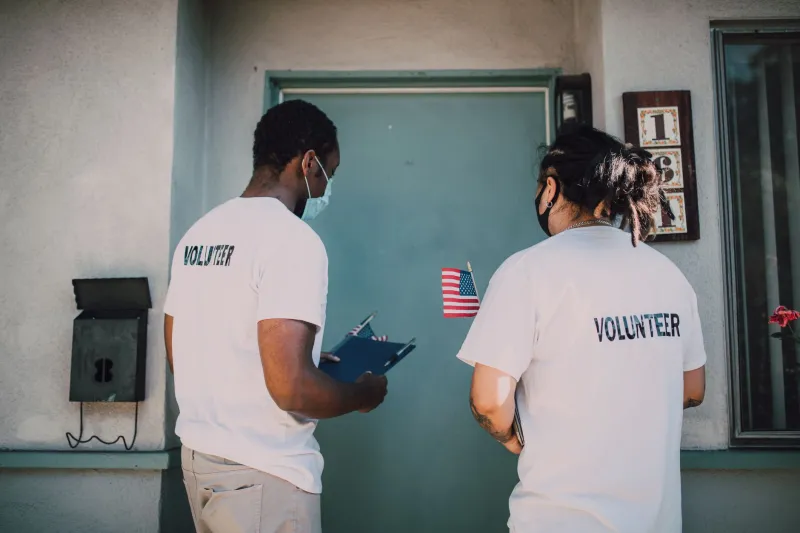
Visit in person when possible. There is no substitute for direct observation. Attend a community event, speak with program participants, or volunteer for a day. The qualitative insight you gain will often tell you more about organizational culture and effectiveness than any document.
Consider capacity-building gifts. Local organizations frequently need support for infrastructure—technology, staff training, financial systems—as much as they need program funding. A donor willing to fund operational capacity is often more valuable than one who restricts gifts to direct services.
The Case for Rebalancing Your Philanthropic Portfolio
None of this is to suggest that national organizations are undeserving of support. Many do vital work at a scale that local organizations simply cannot replicate. The argument, rather, is for intentional rebalancing—a conscious decision to ensure that some meaningful portion of your charitable resources flows to the organizations doing the daily, unglamorous, indispensable work of community building in your own backyard.
When local nonprofits are adequately resourced, the effects are not confined to their direct beneficiaries. Stable community organizations anchor neighborhoods, create employment, build civic trust, and generate the social cohesion that makes broader systemic change possible. They are, in a very real sense, the infrastructure of a healthy society.
At Balaji Charitable Trust, our commitment to empowering communities and transforming lives begins with the recognition that proximity matters. The organizations closest to the problem are often closest to the solution—and they deserve a donor base that sees them clearly, values their work honestly, and invests in their future with the same confidence extended to their more prominent counterparts.
The generosity gap in your own backyard is real. But it is not permanent. It closes, one intentional gift at a time.