Philanthropy's Hidden Paradox: How Middle-Class Americans Out-Give the Ultra-Wealthy—And What That Says About the Soul of American Generosity

America has long celebrated its philanthropic tradition. From Andrew Carnegie's libraries to the Gates Foundation's global health initiatives, the image of the benevolent wealthy donor is deeply embedded in the national consciousness. Yet beneath this celebrated narrative lies a striking and largely underexamined reality: when measured as a proportion of income or net worth, middle-class Americans consistently out-give the ultra-wealthy. This is not a minor statistical footnote. It is a fundamental truth about how generosity actually functions in this country—and what it reveals about our collective values.
What the Numbers Actually Say
Data from the Internal Revenue Service and independent research organizations paint a consistent picture. Households earning between $50,000 and $100,000 annually donate an average of roughly 7 to 10 percent of their discretionary income to charitable causes. By contrast, households with incomes exceeding $10 million per year contribute, on average, between 1 and 3 percent of their adjusted gross income. The Chronicle of Philanthropy and the Urban Institute have both documented this inverse relationship between income concentration and proportional giving over multiple research cycles.
The disparity becomes even more pronounced when total net worth—rather than annual income—is used as the denominator. Ultra-high-net-worth individuals frequently hold vast wealth in appreciating assets, real estate, and private equity that generates little reportable income. When charitable donations are measured against actual accumulated wealth rather than taxable income, the giving gap widens considerably.
This is not an indictment of every wealthy individual. Transformative philanthropists do exist across all income brackets. But the aggregate data challenge the assumption that concentrated wealth naturally produces proportional charitable impact.
The Psychological Architecture of Wealth and Generosity
Why does this gap exist? Behavioral economists and social psychologists have devoted considerable research to this question, and the findings are illuminating.
One prominent theory centers on social proximity. Middle-income Americans are statistically more likely to live near, work alongside, and personally know individuals who are struggling economically. This proximity creates what researchers call "empathic resonance"—a felt connection to need that motivates giving. When your neighbor loses a job or a colleague faces a medical crisis, the impulse to help is immediate and personal.
The ultra-wealthy, by contrast, often inhabit socially insulated environments—gated communities, exclusive clubs, private schools—where economic hardship is largely invisible. This insulation does not make wealthy individuals callous, but it does reduce the environmental cues that activate charitable impulse. Generosity, like many human behaviors, is partly situational.
A second factor involves what psychologists term "wealth psychology"—the cognitive shifts that accompany significant accumulation. Studies suggest that as individuals accumulate greater wealth, they tend to attribute their success more heavily to personal merit and less to structural advantages, luck, or community support. This attribution shift can subtly erode the sense of mutual obligation that underpins charitable motivation.
Structural Vehicles That Defer Rather Than Deliver
Beyond psychology, structural mechanisms within the philanthropic system itself contribute to the giving gap in ways that are rarely discussed publicly.
Donor-advised funds (DAFs), for example, have grown explosively among high-net-worth donors. These accounts allow individuals to claim an immediate tax deduction upon depositing assets, while retaining the ability to distribute those funds to operating charities at any future time—sometimes years or even decades later. According to the National Philanthropic Trust, DAF assets exceeded $230 billion in recent years, yet payout rates to working nonprofits remain inconsistent and often modest relative to total assets held.
Similarly, private foundations are legally required to distribute only 5 percent of their assets annually to charitable purposes—a threshold that many critics argue is insufficient given the scale of assets held in perpetuity and the tax benefits that accompany foundation formation. The result is a system in which significant wealth is designated as "philanthropic" for legal and tax purposes while remaining largely inaccessible to the communities it ostensibly serves.
Middle-class donors, by contrast, give primarily through direct donations to operating nonprofits, religious institutions, and community organizations. Their dollars move quickly into programs that deliver services, support families, and strengthen neighborhoods.
What This Means for Communities
The practical consequences of the giving gap are felt most acutely at the community level. Grassroots organizations—food pantries, after-school programs, domestic violence shelters, neighborhood health clinics—are disproportionately funded by small and mid-sized donors. These are precisely the institutions that provide the connective tissue of community life, yet they are chronically underfunded relative to large, elite-facing nonprofits that attract major donor attention.
Research from the National Committee for Responsive Philanthropy has consistently found that organizations serving low-income communities, communities of color, and rural populations receive a fraction of the philanthropic resources that flow to universities, hospitals, and arts institutions primarily serving affluent populations. The geography of giving reflects the geography of social proximity—and the gap between where wealth concentrates and where need concentrates is growing.
For organizations like Balaji Charitable Trust, this reality underscores the vital importance of cultivating a broad and diverse donor base. Community transformation is not the exclusive province of major gifts. It is built, dollar by dollar, through the sustained commitment of everyday donors who understand that their contributions matter precisely because they are given in proportion to their means.
Rethinking What Generosity Actually Looks Like
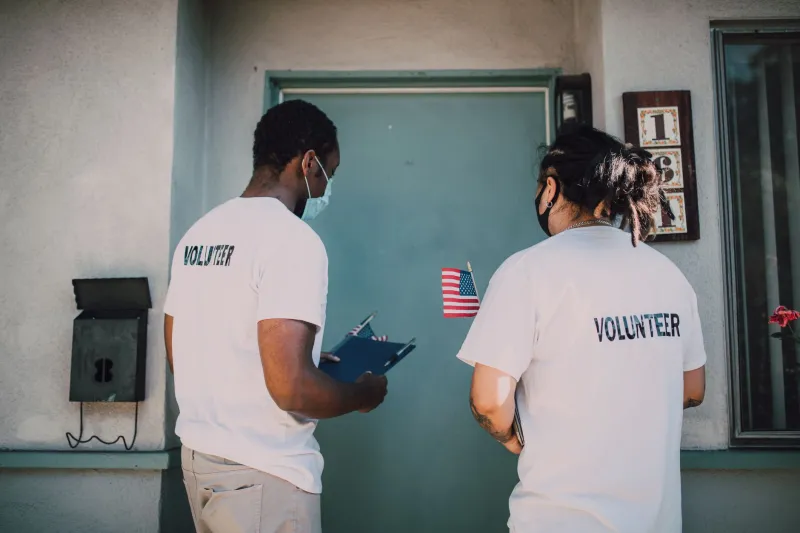
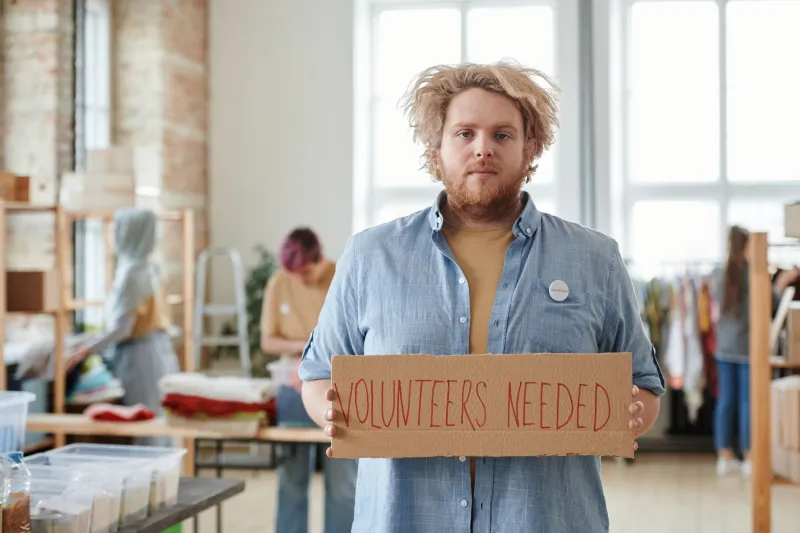
The giving gap invites a broader cultural reckoning. American society has constructed a philanthropic mythology that celebrates large gifts and prominent donors while rendering invisible the quiet, consistent generosity of ordinary households. A family donating $500 to a local food bank, a teacher contributing monthly to a scholarship fund, a retiree volunteering hundreds of hours annually—these acts of giving rarely attract press coverage or naming opportunities, yet they collectively sustain the nonprofit sector.
This is not to suggest that major philanthropy lacks value. Transformative giving at scale can fund research, build infrastructure, and catalyze systemic change in ways that smaller contributions cannot. But the valorization of large-dollar philanthropy, disconnected from proportional sacrifice, distorts our understanding of who is truly carrying the weight of America's charitable commitments.
A more honest accounting would recognize that proportional generosity—giving meaningfully relative to one's means—is the truest measure of philanthropic commitment. By that standard, the middle class deserves far more recognition than it typically receives.
A Call for Structural and Cultural Change
Addressing the giving gap requires action on multiple fronts. Policymakers have proposed reforms to DAF payout requirements and private foundation distribution rules that would accelerate the flow of philanthropic assets to working organizations. Philanthropic advisors are increasingly encouraging high-net-worth clients to adopt explicit payout timelines and community-centered grantmaking strategies.
At the cultural level, the nonprofit sector itself has a role to play in amplifying the stories of everyday donors and the organizations they sustain. When communities see themselves reflected in the narrative of generosity—not as passive recipients but as active contributors—the culture of giving deepens and broadens.
At Balaji Charitable Trust, we believe that empowering communities begins with honoring every act of generosity, regardless of scale. The giving gap is real, but so is the extraordinary generosity of ordinary Americans. Closing that gap—structurally, psychologically, and culturally—is one of the defining philanthropic challenges of our time.