When Success Feels Empty: How Purposeful Giving Restores the Human Bonds That Wealth Alone Cannot Forge

There is a particular kind of silence that settles over a gated community on a Tuesday afternoon. The lawns are immaculate. The cars are new. The houses are large enough that neighbors rarely see one another across the distance of their own square footage. And yet, behind those well-maintained facades, a growing number of Americans who have achieved every conventional marker of success report something unexpected: a deep, persistent sense of isolation.
This is not a fringe phenomenon. Research from institutions including Harvard's Human Flourishing Program has documented what sociologists have quietly observed for decades—that social disconnection does not discriminate by income bracket. In fact, the structural features of affluent American life—private schools, gated subdivisions, remote work, curated social media feeds—can actively erode the spontaneous, cross-cultural encounters that historically bound communities together. The result is a paradox that few high-achievers anticipated when they set their financial goals: the more insulated their lives became from struggle, the more insulated they became from each other.
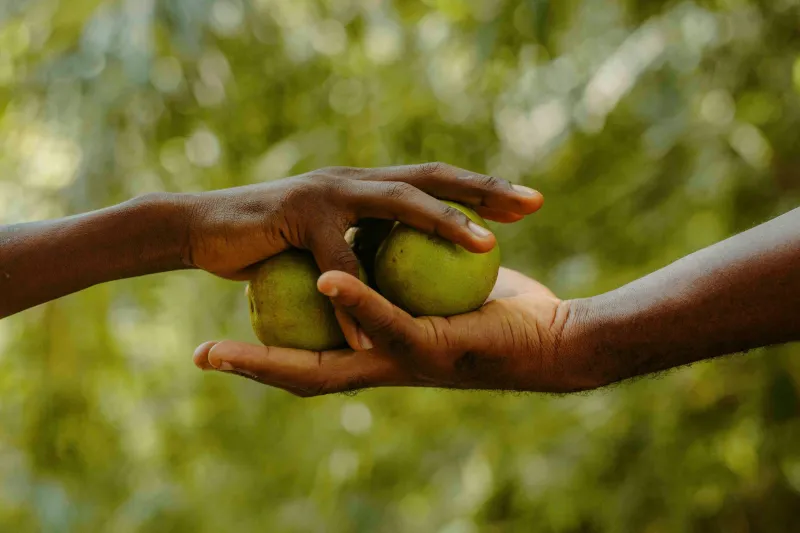
What is increasingly clear, however, is that a meaningful antidote exists. And it does not come from buying a larger home, joining another professional association, or donating anonymously to a cause from the comfort of a laptop. It comes from showing up.
The Architecture of Affluent Isolation
To understand why strategic giving matters as a social remedy, it helps to first understand the mechanisms of disconnection that prosperity can inadvertently construct.
In cities like Scottsdale, Arizona, or Westchester County, New York, residents often live within communities designed around privacy and exclusivity. While these features are marketed as amenities, they quietly dismantle the conditions under which organic community forms: shared public spaces, economic interdependence, and the kind of recurring, low-stakes contact that researchers call "weak ties." Sociologist Mark Granovetter famously demonstrated that weak ties—the neighbor you wave to, the local shopkeeper you chat with—are not peripheral to social health. They are foundational to it.
When those weak ties erode, individuals are left with strong ties to a small, homogeneous inner circle and almost nothing else. Over time, this produces what psychologists describe as a narrowing of identity: a person becomes defined almost entirely by professional achievement and family role, with little exposure to the broader human experience that generates empathy, resilience, and a sense of shared fate.
This is the environment into which strategic charitable engagement can step—not as a feel-good supplement to an otherwise complete life, but as a structural reconfiguration of how a person moves through the world.
From Transactional to Transformational: A Critical Distinction
Not all giving rebuilds community connection. A wire transfer to a national charity, however generous, does not place a donor in a room with a first-generation college student navigating financial aid forms. A year-end tax gift does not create the experience of working alongside a single mother who is learning job skills at a workforce development center.
The distinction between transactional and transformational giving is not about the size of the donation. It is about proximity and participation.
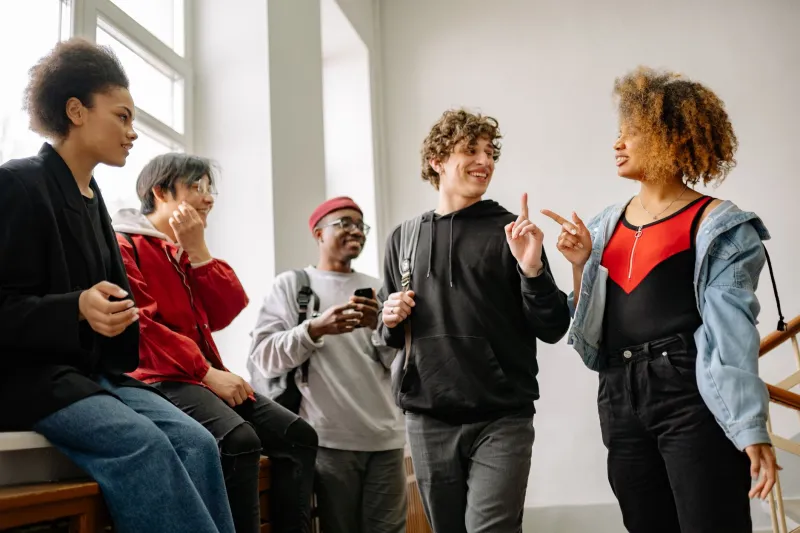
Consider the experience documented through community partnership programs in cities like Minneapolis and Atlanta, where organized volunteer cohorts—many drawn from corporate and professional communities—were embedded within neighborhood-level nonprofits. Participants were not asked to write checks. They were asked to mentor, to build, to listen, and to return the following week. What these programs consistently found was that donors who engaged at this level reported dramatically higher scores on measures of social connectedness, purpose, and even physical well-being than those who gave financially without personal involvement.
The mechanism is straightforward: genuine engagement with a cause introduces a person to an entirely different cross-section of humanity. It disrupts the echo chamber. It generates stories, relationships, and shared history that no amount of financial success can purchase on its own.
Case Studies in Connection: What Hands-On Philanthropy Actually Looks Like
In a suburban corridor outside of Chicago, a group of business owners and physicians came together through a local foundation's community partnership initiative. Their original intention was to fund a food pantry expansion. What they did not anticipate was the series of weekly volunteer shifts that the foundation structured as a condition of the partnership grant.
Within six months, participants described something they had not expected: friendships. Not professional contacts. Not networking relationships. Actual friendships—with fellow donors, with pantry staff, and in some cases with the families they served. Several participants noted that these relationships were among the most honest they had formed in years, precisely because they were built around a shared purpose rather than mutual professional utility.
A similar pattern emerged through a mentorship initiative in Houston's philanthropic community, where high-net-worth donors were paired with youth from underserved neighborhoods for a structured twelve-month engagement. The program's evaluators noted something striking in their follow-up data: the donors reported personal transformation at rates that rivaled those of the young people they mentored. They described expanded worldviews, reduced anxiety, and a renewed sense of meaning in their daily lives.
These outcomes are not coincidental. They reflect a well-documented psychological principle: human beings derive meaning not from comfort alone, but from contribution—particularly contribution that requires effort, consistency, and genuine relationship.
Designing a Giving Practice That Rebuilds Community
For those who recognize themselves in this portrait of prosperous isolation, the path forward is neither complicated nor financially demanding. It does, however, require intentionality.
Begin by identifying a cause that connects to a lived value—not simply a cause that seems respectable or tax-efficient. Authentic engagement is difficult to sustain when the underlying motivation is external validation rather than genuine resonance.
Next, seek out organizations that structure donor involvement beyond the financial transaction. Reputable nonprofits operating at the community level—workforce development programs, literacy initiatives, youth mentorship organizations, neighborhood health clinics—often have robust volunteer and partnership frameworks precisely because they understand that sustained community change requires sustained human presence.
Finally, commit to consistency. The social bonds that emerge from charitable engagement are not forged in a single afternoon of volunteering. They are built over repeated encounters, shared challenges, and the gradual accumulation of trust. Showing up once is admirable. Showing up every month for two years is transformative—for the community served, and for the donor themselves.
The Deeper Return on Investment
At Balaji Charitable Trust, our work across community programs has reinforced a conviction that guides everything we do: generosity is not merely an act of giving something away. It is an act of integration—of weaving oneself into a larger human story.
The Americans who report the greatest sense of belonging and purpose are rarely those who achieved the most in isolation. They are those who found a way to place their resources, their time, and their genuine attention in service of something larger than their own comfort. In doing so, they did not diminish their success. They completed it.
The loneliness epidemic that quietly afflicts so many prosperous communities is real. But it is not inevitable. The antidote has always been available, and it begins with the decision to give not just generously, but personally—to show up, stay present, and allow the act of contribution to do what financial achievement, on its own, never quite can: make us feel genuinely connected to the world we inhabit.