What Happens to Your Brain When You Give: The Science of Generosity and Why It Matters More Than Any Tax Form

Every year, as tax season approaches, conversations about charitable giving predictably shift toward deductions, adjusted gross income thresholds, and itemized returns. These are legitimate considerations, and thoughtful donors are right to account for them. Yet reducing philanthropy to a line on a tax form misses something far more consequential — something that researchers are only now beginning to quantify with precision.
What happens inside the human brain when a person chooses to give? The answer, it turns out, is extraordinary.
The Neuroscience of Generosity
When researchers at the National Institutes of Health conducted landmark studies on charitable behavior, they discovered something that upended conventional assumptions about human selfishness. Participants who donated to charitable causes showed significant activation in the brain's mesolimbic pathway — the same neural network associated with receiving rewards, experiencing pleasure, and forming deep social bonds. Scientists began referring to this phenomenon informally as the "warm glow" effect, though the underlying mechanisms are anything but simple.
The brain releases oxytocin, dopamine, and serotonin in response to acts of giving. Oxytocin, sometimes called the "bonding hormone," reinforces feelings of trust and social connection. Dopamine creates a sense of motivation and satisfaction. Serotonin contributes to emotional stability and a general sense of well-being. Together, these neurochemicals form a cascade that researchers have compared to the physiological response triggered by vigorous exercise or meaningful social interaction.
What makes this particularly significant is that the effect is not fleeting. Longitudinal studies published in journals such as Social Science and Medicine and Psychological Science have demonstrated that individuals who engage in regular charitable giving report higher baseline levels of life satisfaction compared to non-donors, even after controlling for income, health status, and social support networks. Generosity, in other words, appears to rewire the brain over time in ways that compound positively.
Beyond Mood: Real Behavioral Shifts
The neurological benefits of giving extend well beyond momentary emotional uplift. Research conducted at the University of British Columbia found that individuals who spent money on others — whether through formal charitable donations or informal acts of generosity — reported greater happiness than those who spent equivalent sums on themselves, regardless of the dollar amount involved. This held true across a remarkably wide range of income levels and cultural backgrounds.
Perhaps more striking are the findings related to stress and physical health. A study published in the American Journal of Public Health found that older adults who volunteered regularly — a form of giving that extends beyond financial contribution — had mortality rates that were 44 percent lower than non-volunteers, even after accounting for pre-existing health conditions. Stress hormone levels, blood pressure readings, and inflammatory markers all showed measurable improvement among consistent givers.
These are not abstract statistics. They describe real people whose lives were measurably lengthened and enriched by the decision to orient themselves toward the needs of others.
What Balaji Trust Supporters Have Experienced
At Balaji Charitable Trust, we have had the privilege of accompanying hundreds of donors on their philanthropic journeys, and the patterns we observe mirror what the research documents. Supporters who began as one-time contributors — often motivated initially by a specific campaign or a tax-year deadline — frequently describe a gradual transformation in how they relate to their own lives and communities.
One longtime supporter from the Chicago area, a retired educator who began contributing to our literacy programs several years ago, described the experience this way: she had expected to feel good about helping children access books. What she did not anticipate was how deeply her own sense of purpose would deepen. She began volunteering at weekend reading events, then connected other retired teachers to the program, and eventually helped design a curriculum component that the Trust now uses across multiple partner schools. "I came to give something," she noted, "and somehow ended up receiving far more than I offered."
This trajectory — from passive donor to active community architect — is one we witness repeatedly. And the neuroscience helps explain why. Each act of giving reinforces neural pathways associated with purpose and connection, making the next act of generosity feel more natural and more rewarding. Generosity, like most meaningful human behaviors, becomes easier and more fulfilling with repetition.
The Social Dimension: Belonging as a Benefit
One dimension of giving that neuroscience has begun to illuminate more clearly is its role in constructing and sustaining a sense of community belonging. Human beings are profoundly social creatures, and our brains are wired to seek connection with others who share our values. Charitable giving — particularly when it occurs within a community of like-minded individuals — satisfies this deep neurological need in ways that transactional relationships rarely can.
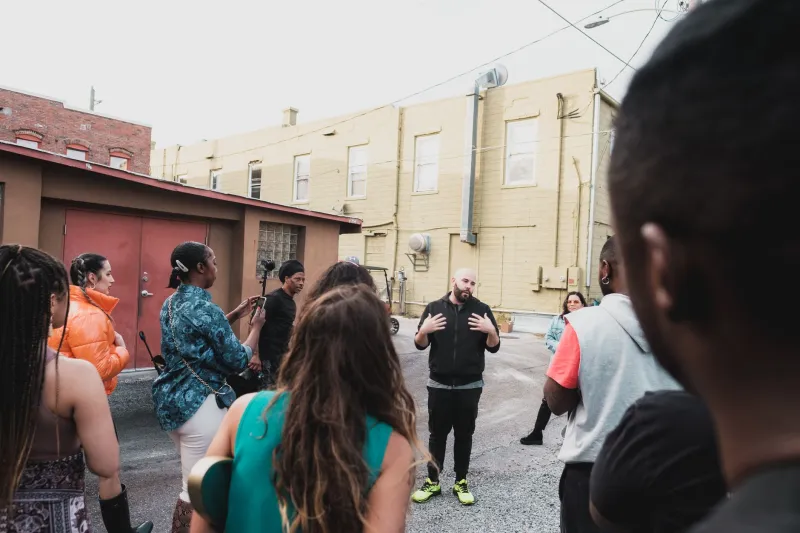
At Balaji Charitable Trust, our annual community gatherings consistently produce what participants describe as an unexpected sense of kinship. Donors who had never previously met discover shared concerns about affordable housing, educational equity, or food security. These connections, formed in the context of shared purpose, frequently outlast the specific event and evolve into lasting personal and professional relationships.
Researchers at Harvard's Human Flourishing Program have documented similar effects, noting that communities with higher levels of charitable engagement demonstrate stronger social cohesion, lower rates of social isolation, and greater collective resilience during periods of economic or environmental stress. Generosity, it appears, does not merely benefit recipients. It strengthens the social fabric from which all members draw sustenance.
Rethinking the Return on Investment
For individuals accustomed to evaluating decisions through a financial lens, it may be useful to reframe what "return on investment" actually means in the context of charitable giving. A tax deduction represents a one-time financial benefit, typically modest relative to total income, that expires at year's end. The neurological and social benefits of sustained giving — improved mental health, greater life satisfaction, reduced stress, deeper community ties, and a reinforced sense of purpose — accumulate over time and touch virtually every dimension of a person's life.
This is not to dismiss the practical value of tax-advantaged giving strategies. At Balaji Charitable Trust, we actively help supporters structure their generosity in ways that maximize both charitable impact and financial efficiency. However, we believe that donors who give primarily for tax purposes are, in a very real sense, leaving the most valuable returns unclaimed.
An Invitation to Experience the Difference
The science of generosity is still evolving, and researchers continue to uncover new dimensions of how giving shapes the human mind and body. What is already clear, however, is that the act of extending resources toward others — time, money, expertise, or attention — produces changes in the giver that no financial instrument can replicate.
At Balaji Charitable Trust, we invite you to move beyond the write-off and toward the fuller picture of what generosity makes possible. Whether you are considering your first contribution or deepening a long-standing commitment, the research is unambiguous: the most significant benefits of giving are not recorded on any tax form. They are written in the architecture of a more purposeful, connected, and fulfilling life.