Left Behind by the Click: How the Digital Fundraising Boom Is Widening the Gap Between Rural and Urban Nonprofits
A Revolution With Uneven Rewards
Over the past decade, digital fundraising has transformed American philanthropy. Platforms like GoFundMe, Network for Good, and Classy have made it possible for donors to give instantly, track impact in real time, and share campaigns across social networks with a single tap. Giving Tuesday, the annual online fundraising event held each November, now raises hundreds of millions of dollars in a single day. By nearly every metric, the digitization of charitable giving has been a success story.
But success stories, examined closely, often contain a less comfortable subplot. For the thousands of nonprofits operating in rural counties, tribal lands, and geographically isolated communities across the United States, the digital giving revolution has arrived unevenly—and in some cases, not at all.
The result is a two-tiered philanthropic system in which organizations serving urban and suburban populations enjoy expanding access to digital donors, while their rural counterparts struggle with infrastructure deficits, technological barriers, and a fundraising landscape that was not designed with them in mind.
The Broadband Problem Is Not Abstract
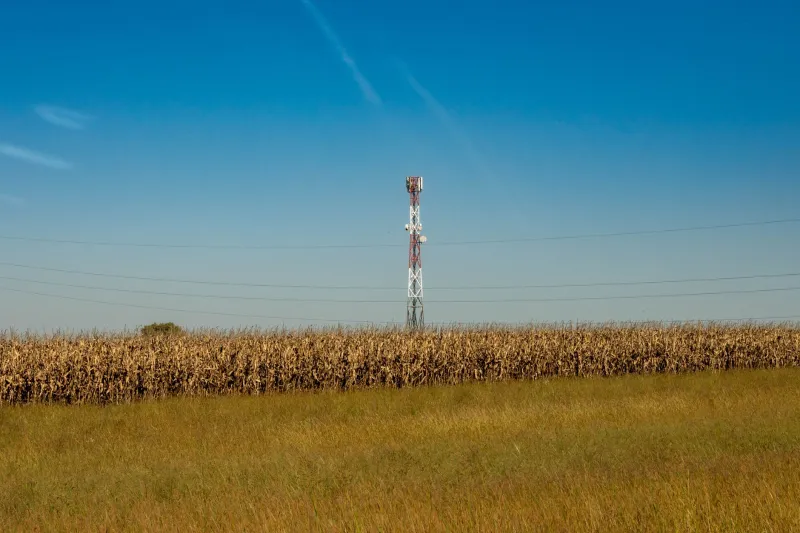
To understand why rural nonprofits face distinctive fundraising disadvantages, begin with the most basic infrastructure challenge: internet access. According to Federal Communications Commission data, tens of millions of Americans—disproportionately located in rural and tribal areas—lack access to reliable broadband service. In states like Mississippi, West Virginia, and Alaska, connectivity gaps remain severe even after years of federal investment aimed at closing them.
For nonprofits, this creates a compounding problem. Staff members working from rural offices may lack the reliable high-speed connections necessary to manage cloud-based donor databases, run video fundraising campaigns, or process online donations efficiently. Potential donors in the same communities face the same barriers, limiting the local digital donor base that many small nonprofits depend upon for grassroots support.
When connectivity is unreliable, tasks that urban nonprofit professionals complete in minutes—updating a donor management system, launching a crowdfunding campaign, hosting a virtual fundraising event—become time-consuming, frustrating, and sometimes impossible.
Technology Literacy and the Capacity Cliff
Broadband access is only one dimension of the challenge. Even where internet service is technically available, rural nonprofits often operate with small, generalist staffs who wear many hats and have limited time or resources for technology training. The digital fundraising ecosystem has grown enormously complex, encompassing email marketing platforms, social media advertising, payment processing integrations, and analytics dashboards. Navigating this landscape effectively requires skills that many small nonprofits simply have not had the opportunity to develop.
Larger urban organizations, by contrast, can afford dedicated digital marketing staff or contract with specialized consultants. They benefit from proximity to technology professionals, university partnerships, and a broader ecosystem of nonprofit capacity-building resources. The gap between what a well-resourced urban nonprofit can execute digitally and what a two-person rural organization can manage is not a gap of ambition—it is a gap of structural support.
This disparity shapes donor perception in ways that are rarely acknowledged. Online giving platforms reward organizations that can generate social media engagement, email list growth, and peer-to-peer fundraising activity. Algorithms favor campaigns with momentum. Organizations that lack the infrastructure to compete in this environment are systematically disadvantaged, not because their work is less valuable, but because the tools were built for a different context.
Who Gets Left Out—And What It Costs Communities
The communities served by rural nonprofits are not abstractions. They include elderly residents in Appalachian counties who rely on Meals on Wheels programs to remain in their homes. They include farmworker families in the Central Valley navigating immigration systems without legal counsel. They include Native American youth in remote reservations whose mental health services depend on underfunded tribal nonprofits.
When rural nonprofits struggle to compete in the digital fundraising landscape, these communities bear the cost. Programs are cut. Staff positions go unfilled. Services that exist nowhere else in a given county—sometimes in a given region—become precarious.
The irony is that many rural nonprofits serve populations with the most acute needs and the fewest alternative sources of support. The communities they serve often lack the corporate headquarters, major foundations, and wealthy individual donors that sustain urban organizations. Digital fundraising was supposed to democratize charitable giving by connecting donors anywhere with causes everywhere. For rural nonprofits, that promise has largely gone unrealized.
What Donors Can Do Right Now
For donors who want to address this inequity directly, several practical strategies are worth considering.
Seek out rural organizations intentionally. Many giving platforms allow donors to filter by geography. Choosing to direct contributions toward nonprofits in rural or underserved regions is itself a corrective action. Organizations like the Rural Support Partners network and state-level community foundations with rural giving programs can help donors identify credible recipients.
Fund operational capacity, not just programs. Rural nonprofits need support for technology infrastructure—donor management software, website development, digital training—as much as they need program funding. Donors willing to support these less visible investments can make an outsized difference.
Give by check or phone when appropriate. Some rural nonprofits still process a significant share of their donations through traditional methods. Donors who default to online giving may inadvertently exclude organizations that lack robust digital payment systems. Calling an organization directly and asking how to give most helpfully is a simple but meaningful act.
Advocate with platforms. Major digital fundraising platforms have the technical capacity to create features that better serve rural organizations—reduced fee structures for small nonprofits, multilingual support, tools designed for low-bandwidth environments. Donors who are also customers of these platforms can raise these concerns directly.
A Structural Challenge Requiring Structural Solutions
Ultimately, closing the rural digital fundraising gap requires more than individual donor choices. It demands investment in broadband infrastructure, nonprofit technology training programs, and philanthropic policies that explicitly counterbalance the digital advantage currently enjoyed by larger, urban organizations.
At Balaji Charitable Trust, we recognize that empowering communities means ensuring that the tools of modern philanthropy reach every community—not only those with the fastest connections and the most sophisticated marketing capabilities. A giving revolution that leaves rural America behind is not a revolution. It is a reallocation.
The click that funds a life-changing program should be available to every nonprofit that has earned it, regardless of the zip code it serves.